


Emergence
noun
social science, science — specializedThe development of particular patterns, properties, or behaviors in parts of complex systems that happen only when the parts of the system interact, and that the parts do not have on their own.
Recently, some juniors and interns at work reached out to me to find out more about quantitative finance. Through the conversation, I reflected upon my career journey and how my view of the industry and quantitative finance developed over the years.
When I first encountered quantitative finance, I saw it mainly as a discipline of models — a way to price derivatives, measure risk, and bring mathematical elegance into financial markets. But the more time I spent in the industry, the more I realized that quantitative finance is not just about building better models. As trading becomes more digital, quantitative finance increasingly becomes one of the key languages of the market. It is essential to understanding how uncertainty forms, how markets react to it, and how that uncertainty eventually becomes tradable.
That is what makes the field so fascinating today.
Things have evolved at lightning speed. Agentic AI is changing how we solve problems. New tradable markets are emerging. Tokenization is challenging the boundaries of market hours. Geopolitics is becoming harder to ignore. Data is no longer scarce. The ability to process it meaningfully is.
All these developments point to a larger shift: quantitative finance is becoming more than a pricing discipline. It is becoming a way to understand the complex financial world that we live and breathe.
Perhaps this makes a good topic to restart this series with — the development of quantitative finance, and the emergence of new forms of tradable uncertainty in financial markets.
Quantitative Finance as a Financial Service
When people think about the history of quantitative finance, the most iconic discovery many would point to is the Black-Scholes-Merton model, also known as the “trillion-dollar equation”. Published in 1973, the model revolutionised the industry by giving market participants a means to price optionality in a risk-neutral manner (Black & Scholes, 1973; Merton, 1973).
In the same year, the first modern option exchange, the Chicago Board Options Exchange (CBOE), was founded. This was a significant moment. Optionality no longer was a bespoke feature negotiated between parties over-the-counter. It became a tradable instrument on a lit market, made accessible to more people (Cboe, 2024).
This marked an era of financial engineering. Early quants moved deeper into financial mathematics, and more advanced models were subsequently developed. Pricing became a service. Investors could buy structured payoffs, while the sell-side manufactured these exposures, hedged them with more vanilla instruments, and earned a spread for intermediating complexity.
Over time, financial engineering expanded beyond options. Quantitative models were no longer used only for derivatives pricing. They were also used for risk quantification, structuring, and repackaging uncertainty into products that could be sold to different investors. Value-at-Risk became a common framework to quantify downside risk (RiskMetrics Group, 1996), while credit derivatives allowed institutions to transfer and repackage credit exposures.
At the height of financial engineering, the Gaussian copula provided the industry with a way to model default correlation and price complex credit products (Li, 2000). Products such as Collateralized Debt Obligations, or CDOs, became popular. The idea was simple in appearance: pool together many credit exposures, slice the pool into tranches with different levels of risk, and sell each tranche to investors with different risk appetites. Some of these tranches were even sold with triple-A ratings.
In principle, this was good product innovation. Risk could be decomposed, repackaged, and transferred to investors who were willing to hold it.
Until the assumptions failed.
The Hard Lesson from the Crisis
The issue with the Gaussian copula was not simply that it was mathematical. The issue was that it relied on assumptions that looked clean in normal times but became fragile under stress.
The model assumed that default correlation could be estimated and applied in a relatively stable way. Under this assumption, a diversified pool of mortgages appeared safer than it truly was. The tranches looked less risky, and therefore could be priced more cheaply than the risks they actually entailed.
As we learned from the Global Financial Crisis (GFC), the default correlation is not static. Defaults across mortgages became highly correlated when the housing bubble burst. Default correlation spiked, contagion spread, and the financial system came under severe stress (Brigo, Pallavicini, & Torresetti, 2009).
The GFC revealed a very important lesson for quants: that quantitative methods are not deterministic hacks of the financial markets.
Quantitative finance is a social science rather than a natural science. Unlike physics, markets do not operate according to static laws. The agents within the system observe, react, adapt, arbitrage, panic, and change their behavior. Once a model becomes widely used, it can even change the very market it is trying to describe.
This means that all models are wrong, even when some are useful.
In such a discipline, understanding model assumptions becomes essential. A model is not truth. It simplifies reality so that we can frame problems in manageable ways and make decisions. It is the quant’s responsibility to know what assumptions are made in a model, when those assumptions apply and that the model can be trusted, when it should be questioned, and when it should be switched off.
Regulatory Reform, Futurization, and Setting the Stage for Quant Trading
The Global Financial Crisis did not only expose model risk. It also exposed structural weaknesses in the financial system.
One of the most important was the opacity of the bilateral over-the-counter derivatives market. Counterparty exposures were difficult to observe. Risk was spread across a web of bilateral relationships. Regulators had limited visibility into where the largest vulnerabilities were building up.
Post-crisis, rules such as the Uncleared Margin Rules were introduced to reduce excessive bilateral exposures and encourage greater use of central clearing. The idea was to make the system more transparent, better margined, and easier to manage in the event of default (Basel Committee on Banking Supervision & International Organization of Securities Commissions, 2020).
Central clearing works by introducing a central counterparty (CCP) between buyers and sellers. The CCP becomes the buyer to every seller and the seller to every buyer. This does not remove risk from the system, but it changes how risk is managed. It allows exposures to be margined, monitored, netted, and default-managed through a centralized structure.
While some OTC instruments moved towards central clearing, others moved towards what is often described as futurization.
Futurization refers to the creation of exchange-traded alternatives to instruments that were traditionally traded over the counter. Instead of negotiating bespoke contracts bilaterally, market participants can trade standardized futures or options on exchange, with transparent pricing, central clearing, and more accessible liquidity.
Futurization increased the universe of tradable assets on an exchange and unveiled a new era of trading. Exchange-traded derivatives, with its transparent pricing and electronic execution, set a good environment for the application of quantitative finance. Attention shifts from derivatives pricing to quantitative trading.
Technology as a Super-cycle
Apart from regulatory reforms and new exchange-traded derivatives post the GFC, the world also evolved technologically. Technology created new possibilities for markets, and to me, three developments stood out that allowed quantitative finance to thrive.
Technology created a new asset class
The GFC not only revealed the weaknesses of intermediaries, it also inspired the creation of Bitcoin — the first decentralized digital money that allows peer-to-peer transactions without the need of a trusted middleman (Nakamoto, 2008).
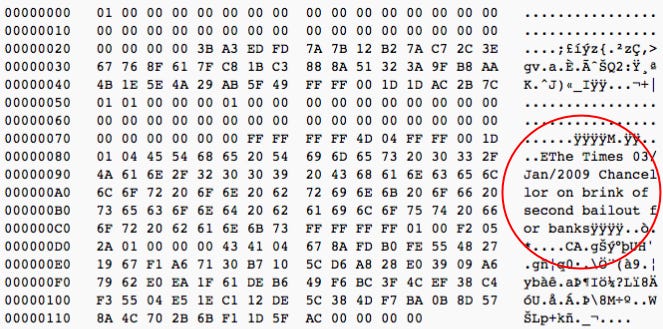
Bitcoin was a multidisciplinary creation. It drew inspiration from cryptography, computer science, economics, game theory, and distributed systems. More importantly, it showed that anyone could design a new monetary system with code, incentives, and a network of participants.
This set a precedent. Blockchain technology became popularized as people started to create new cryptocurrencies, each attempting to improve on or extend Bitcoin’s design.
The trading of cryptocurrencies was empowered by both centralized crypto exchanges and decentralized platforms. These markets operate 24/7, are fully digital, and are highly accessible through APIs. For quantitative traders, crypto became a natural test bed. Data was relatively accessible, trading infrastructure was open, and strategies could be deployed quickly.
Cryptocurrency therefore did not only create a new asset class. It created a new market structure for experimentation.
Neo-brokerages democratized trading
Trading also became much easier in the mid-2010s with the rise of digital and mobile-first brokerages. Platforms such as Robinhood, Tiger Brokers, Moomoo, and others made the trading experience far more accessible to retail investors. Trades could be entered with a tap of the screen.
This changed how people interacted with markets. Investing and trading became less intimidating. Market access became more digital, interactive and immediate. With that accessibility came greater curiosity. More people started to ask how markets work, how prices move, how strategies are built, and how data can be used to make better decisions. More began learning about quantitative finance, and experimenting with trading, bringing the field closer to mainstream conversations.
Digitization created the new fuel — data
Ultimately, what drives quantitative finance is digitization.
With digitization comes an abundance of digital footprint in the form of data. Prices, transactions, order books, news, satellite images, shipping data, weather patterns, social media, corporate filings, and even alternative datasets can all be transformed into signals.
As more data became available, more sophisticated models could be deployed. These models could process larger amounts of information and form more nuanced trading views. Further advancement in machine learning and natural language processing also enabled unstructured data to be transformed into usable inputs.
This created a reinforcing spiral. Data gave rise to better models, and better models made more data economically useful.
Quantitative finance thrived in such an environment. For once, data was no longer a bottleneck.
Financialization of Everything
With technological advancement and digitization, quantitative finance has evolved from being mainly a tool for financial services into a broader way of forming a market view.
In the earlier phase, quantitative finance was heavily associated with the Q-probability measure — the risk-neutral world of pricing, replication, and hedging. Increasingly, the emphasis has shifted towards the P-probability measure — the real world, of forecasting, signal extraction, positioning, and decision-making.
This is an important shift, where the question is no longer only: what is the fair value of this derivative?
The question is increasingly: what does the data say about the future, and how can that view be expressed in the market?
This is where the financialization of everything begins.
Financialization of Commodities
Commodity trading was historically grounded in the physical world. Producers, consumers, merchants, and physical traders dominated the market. A barrel of oil, a cargo of LNG, a tonne of copper, or a megawatt-hour of electricity was tied to logistics, storage, transportation, and physical delivery.
But with the futurization of commodities, financial players could participate without necessarily touching the physical commodity. They could express views on supply, demand, inventory, weather, geopolitics, and macroeconomic conditions through exchange-traded derivatives. The growing role of financial investors in commodity futures markets has also shaped debates around risk sharing, information discovery, and price formation (Cheng & Xiong, 2014).
Information also became more powerful. Trade data, satellite imagery, vessel tracking, weather forecasts, and news flows allowed financial participants to understand physical markets from a distance. This brought more liquidity, more diversity of participants, and more systematic trading into commodity markets.
As an example, the ICE Dutch TTF natural gas futures price is no longer influenced only by the fundamental demand and supply dynamics of European natural gas. From my experience as an LNG quant, financial flows became one of the factors we started watching more closely in the formation of futures prices.
Through that lens, LNG prices increasingly face two orders of price determination. The first is the demand and supply of physical molecules — storage, weather, infrastructure, shipping, and consumption. The second is the demand and supply of derivatives, which influences the price benchmarks upon which physical commodity trades are often based.
In September 2024, S&P Global reported that hedge funds had been selling out of European natural gas futures, while investment funds accounted for nearly 22% of Dutch TTF futures positions. Traders also pointed to “funds closing their positions” as a key driver behind the fall in European gas and LNG prices, with fund flows amplifying the bearish pressure on both prompt and forward prices (Seth & Blakeway, 2024).
This is a good example of financialization in practice. A physical market remains grounded in molecules, storage, weather, and infrastructure. But once the derivative market becomes sufficiently liquid and widely traded, financial positioning itself becomes part of the price-formation process.
“Financialization of Weekends”
Crypto also challenged a long-standing assumption in traditional finance: that markets sleep.
Unlike traditional financial markets, digital assets trade continuously. They do not pause over the weekend. News, policy changes, geopolitical shocks, or market rumors can be reflected in crypto prices while traditional markets are closed.
Cryptocurrency has introduced a generation into the world of always-on price discovery. And with tokenization, 24/7 trading is no longer limited to cryptocurrencies. The tokenization of real-world assets (RWAs) and introduction of perpetuals on crypto exchanges blurs the boundary between trading hours and non-trading hours of the underlying assets.
For instance, at the onset of the US-Iran conflict on 28 February 2026, traders rushed to Hyperliquid - a native crypto exchange that offers RWA perps - to trade on tokenized oil futures when the traditional exchanges were closed on the weekends (Financial Times, 2026). Even when the main market is closed, adjacent markets may still be reacting to new information.
This introduces competition into traditional markets. Tradfi exchanges are compelled to extend their trading hours in order to retain control over liquidity of their products. 24/7 trading gradually becomes less of a good-to-have, and more a requisite to remain competitive.
For once, the market never truly sleeps.
Financialization of Information
Data fuels every decision making. With the abundance of data we have today, and the processing prowess available on our laptops, we are equipped to assign value to things that were once intangible.
We can model probabilities of future events. We can estimate the likelihood of election outcomes, policy decisions, macroeconomic releases, weather events, corporate actions, or geopolitical developments. Prediction markets and event contracts sit within this broader trend.
These markets transform uncertainty into price. They allow participants to express views not on a traditional asset, but on the probability of an outcome. In doing so, they turn information itself into something tradable.
This is powerful. Markets are no longer limited to pricing assets with cash flows, collateral, or physical value. They can also price expectations, beliefs, probabilities, and information.
At the same time, this development requires caution. Not every uncertainty should become a tradable product. Market design, regulation, and incentives matter. A market can aggregate information, but it can also amplify noise, manipulation, and speculation.
The financialization of information may be one of the most fascinating developments in modern markets, but it also reminds us of the same lesson from earlier phases of quantitative finance: innovation is useful only when we understand its assumptions, incentives, and limits.
Emergence
Technology and data have led to a new form of emergence in financial markets. They have not only democratized trading, but also made new products, new markets, and new ways of expressing views possible. Consequently, Quantitative finance has become richer in scope. It is no longer just about pricing another derivative, but about understanding the complex financial world that we live and breathe, with the data that we can process and analyze.
Perhaps this also calls for a paradigm change. In the past, when data was less abundant and computing power was more limited, parsimony was not just elegant — it was necessary. Models had to simplify aggressively because both information and computation were scarce.
Today, the constraints are changing. With generative AI and agentic AI, new approaches to problem-solving may emerge. We may no longer be limited only by our natural cognition or by the traditional ways we decompose problems. AI can help us explore more possibilities, process more context, and do some of the heavy lifting. But the role of the quant does not disappear. It shifts towards asking better questions, monitoring assumptions, understanding incentives, and knowing when the machine may be confidently wrong.
Perhaps AI is not meant to simply automate how we already work. Perhaps its greater potential is to help us solve problems in ways that humans would not naturally arrive at on our own.
And that, to me, is the next stage of emergence in quantitative finance.
References
Basel Committee on Banking Supervision & International Organization of Securities Commissions. (2020). Margin requirements for non-centrally cleared derivatives. Bank for International Settlements.
Black, F., & Scholes, M. (1973). The pricing of options and corporate liabilities. Journal of Political Economy, 81(3), 637–654.
Brigo, D., Pallavicini, A., & Torresetti, R. (2009). Credit models and the crisis, or: How I learned to stop worrying and love the CDOs.
Cboe. (2024). The creation of listed options at Cboe. Cboe.
Cheng, I.-H., & Xiong, W. (2014). Financialization of commodity markets. Annual Review of Financial Economics, 6, 419–441.
Financial Times. (2026, March 15). Retail traders rush into oil bets as Iran war drives wild price swings. Financial Times.
Li, D. X. (2000). On default correlation: A copula function approach. The Journal of Fixed Income, 9(4), 43–54.
Merton, R. C. (1973). Theory of rational option pricing. The Bell Journal of Economics and Management Science, 4(1), 141–183.
Nakamoto, S. (2008). Bitcoin: A peer-to-peer electronic cash system.
RiskMetrics Group. (1996). RiskMetrics technical document.
Seth, T., & Blakeway, A. (2024, September 11). European gas, LNG prices struggle to find a floor as funds shift position. S&P Global Commodity Insights.
Disclaimer: All views expressed in this article are strictly my own and do not reflect the views, opinions, policies, or positions of my employer, past employers, or any organization with which I am affiliated. Nothing in this article should be interpreted as professional, investment, legal, or financial advice.